Gastric sleeve surgery, also called sleeve gastrectomy, is one of the most commonly performed weight loss surgeries in the world. It is designed for people who live with severe obesity or obesity-related health problems and have not achieved lasting results with diet, exercise, medication or lifestyle changes alone.
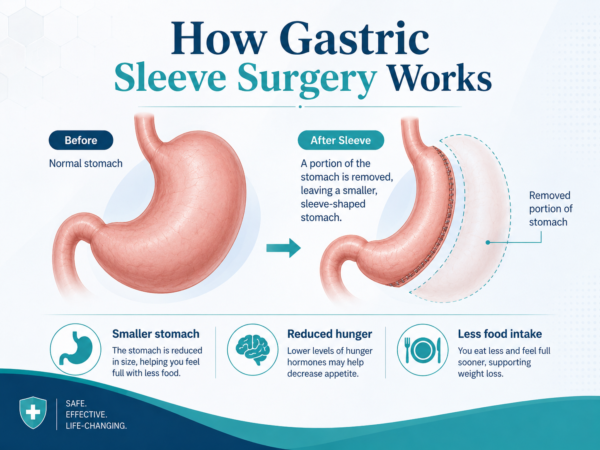
During the procedure, a surgeon removes a large portion of the stomach and leaves behind a narrow, sleeve-shaped stomach. This smaller stomach holds less food, helps patients feel full sooner and may also affect hunger-related hormones. Unlike gastric bypass, gastric sleeve surgery does not reroute the intestines, which is one reason many patients and surgeons consider it a simpler bariatric option.
Obesity is not just a cosmetic concern. The World Health Organization reported that in 2022, 2.5 billion adults were overweight and more than 890 million adults were living with obesity worldwide. In the United States, the CDC estimated adult obesity prevalence at 40.3% during August 2021–August 2023 with severe obesity affecting 9.4% of adults.
What Is Gastric Sleeve Surgery?
Gastric sleeve surgery is a bariatric procedure that permanently reduces the size of the stomach. In most cases, it is performed laparoscopically, meaning the surgeon uses small incisions, a camera and specialized instruments instead of making one large abdominal cut.
The procedure removes the curved outer portion of the stomach. The remaining part looks like a tube or “sleeve.” Because the new stomach is much smaller, patients usually eat smaller portions and feel satisfied faster.
The surgery also affects appetite regulation. The part of the stomach that is removed produces ghrelin, often called the “hunger hormone.” Although hunger does not disappear forever, many patients notice that their appetite is reduced during the early months after surgery.
Gastric sleeve surgery is considered restrictive because it limits how much food the stomach can hold. It is different from gastric bypass or duodenal switch procedures, which also change how food travels through the intestines.
Why Gastric Sleeve Surgery Has Become So Popular?
Sleeve gastrectomy has become a leading bariatric procedure because it offers a balance between effectiveness, technical simplicity and long-term weight loss potential. According to ASMBS estimates; 157,254 sleeve procedures were performed in the United States in 2023 compared with 63,132 Roux-en-Y gastric bypass procedures.
Globally sleeve gastrectomy is also widely used. IFSO-related registry research has reported sleeve gastrectomy as the most performed primary metabolic and bariatric surgery procedure, followed by Roux-en-Y gastric bypass.
Patients often choose gastric sleeve surgery because it does not require an intestinal bypass, may involve fewer nutritional absorption problems than bypass procedures and usually provides stronger weight loss than older options such as gastric banding. However: it is still major surgery and requires lifelong lifestyle changes.
Who Is a Good Candidate for Gastric Sleeve Surgery?
A person may be considered for gastric sleeve surgery if they have severe obesity or obesity-related medical conditions. Traditional eligibility criteria often include:
| Candidate Factor | Common Requirement |
|---|---|
| BMI 40 or higher | May qualify even without obesity-related disease |
| BMI 35–39.9 | May qualify with conditions such as type 2 diabetes, high blood pressure or sleep apnea |
| BMI 30–34.9 | May be considered in selected patients with metabolic disease, depending on guidelines and local rules |
| Lifestyle history | Previous attempts at medically supervised weight loss are often reviewed |
| Mental readiness | Patient must understand lifelong diet, supplement and follow-up requirements |
The 2022 ASMBS/IFSO guidelines expanded the discussion around bariatric surgery eligibility. These guidelines recommend metabolic and bariatric surgery for individuals with BMI greater than 35, regardless of whether obesity-related conditions are present and state that surgery should be considered for some people with BMI 30–34.9 who do not achieve durable results with nonsurgical methods.
Still, candidacy is not based on BMI alone. A bariatric team may evaluate medical history, eating behaviors, reflux symptoms, previous abdominal surgery, mental health, alcohol use, medication use and the patient’s ability to follow long-term care.
How Gastric Sleeve Surgery Helps With Weight Loss?
Gastric sleeve surgery supports weight loss in several ways.
First; it reduces stomach capacity. Before surgery, the stomach can stretch to hold a large meal. After sleeve gastrectomy, the stomach holds much less food, especially in the early recovery period. This makes overeating physically uncomfortable and encourages smaller meals.
Second; it may reduce hunger. Because part of the stomach that produces ghrelin is removed, many patients experience lower appetite, especially during the first year.
Third; it changes eating behavior. Patients must eat slowly, chew carefully, prioritize protein and avoid drinking fluids with meals. These habits can reduce calorie intake without requiring constant hunger.
Fourth; weight loss may improve mobility, energy and metabolic health, making it easier to exercise and maintain a healthier routine.
Gastric Sleeve Surgery Statistics
Here are some useful statistics for understanding the scale and results of gastric sleeve surgery:
| Statistic | What It Means |
|---|---|
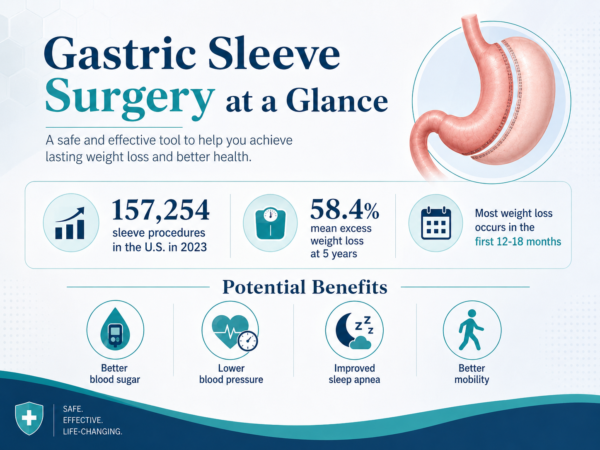
| 157,254 sleeve procedures in the U.S. in 2023 | Sleeve gastrectomy remains a dominant bariatric procedure in the U.S. |
| 40.3% U.S. adult obesity prevalence | Obesity remains highly common among adults in the United States. |
| 890+ million adults with obesity worldwide | Obesity is a global health issue, not only a U.S. problem. |
| 38–87 pounds lost after 1 year in one study of common weight loss surgeries | Actual results vary by procedure and patient. |
| 58.4% mean excess weight loss at 5 years in one long-term review | Gastric sleeve may produce durable weight loss for many patients. |
| More than 20% total weight loss at 10+ years in a meta-analysis | Long-term results can remain meaningful, but follow-up matters. |
Expected Weight Loss After Gastric Sleeve Surgery
Weight loss after gastric sleeve surgery is usually fastest during the first 6 to 12 months. Many patients continue losing weight for 12 to 18 months before reaching a more stable range.
Results vary change on starting weight, age, sex, activity level, diet quality, medical conditions, sleep, medications and long-term follow-up. Someone who follows the post-surgery plan closely may lose significantly more weight than someone who returns to high-calorie liquids, grazing or frequent snacking.
A long-term systematic review found mean excess weight loss after sleeve gastrectomy of 58.4% at 5 years, with similar excess weight loss percentages reported at 6, 7, 8 and 11 years. The same review also reported improvement or resolution in several obesity-related conditions, including type 2 diabetes, hypertension, dyslipidemia and obstructive sleep apnea.
A realistic expectation is not “effortless thinness.” Gastric sleeve surgery is a tool. It can reduce hunger and portion size but long-term results still depend on food choices, protein intake, physical activity, emotional eating control and medical follow-up.
Gastric Sleeve Recovery Timeline
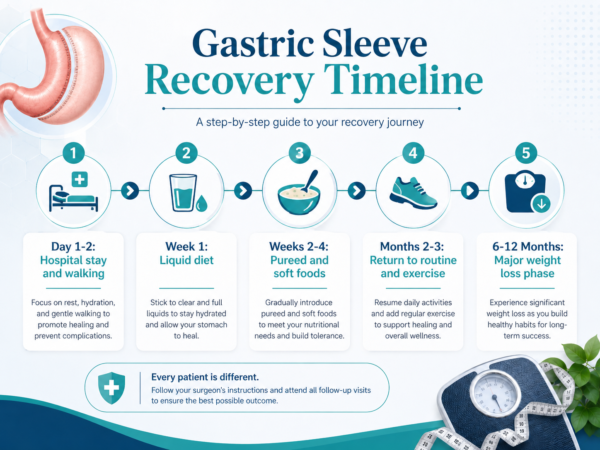
Recovery is different for every patient but the general timeline often looks like this:
| Time After Surgery | What Usually Happens |
|---|---|
| First 24–48 hours | Hospital monitoring, pain control, walking short distances, fluid intake begins |
| First week | Liquid diet, fatigue, gas discomfort, small sips of fluids, gradual movement |
| Weeks 2–3 | Pureed or soft foods may begin depending on surgeon’s plan |
| Weeks 4–6 | Many patients return to desk work and light daily routines |
| Months 2–3 | Food variety expands; exercise becomes more structured |
| Months 6–12 | Major weight loss period; new habits become essential |
| After year 1 | Long-term maintenance, annual labs, vitamin monitoring and weight regain prevention |
Patients should not rush the diet stages. The stomach needs time to heal. Eating solid foods too soon, drinking carbonated beverages, overeating or ignoring pain can increase the risk of nausea, vomiting and complications.
Gastric Sleeve Diet: What Patients Eat After Surgery?
The post-surgery diet usually progresses in stages. Each bariatric program may have its own instructions but the general path is;
Clear liquids: water, broth, sugar-free fluids and electrolyte drinks.
Full liquids: protein shakes, smooth soups and low-sugar liquids.
Pureed foods: blended protein-rich meals, yogurt and soft textures.
Soft foods: eggs, fish, soft chicken, cottage cheese and cooked vegetables.
Regular bariatric diet: small, protein-focused meals with controlled portions.
Protein becomes a priority because rapid weight loss can increase muscle loss. Many bariatric programs recommend protein at every meal. Patients are also usually advised to avoid sugary drinks, alcohol, carbonated beverages and frequent snacking.
One common mistake is drinking calories. Milkshakes, sweet coffees, fruit juices, alcohol and high-calorie smoothies can pass through the smaller stomach easily and slow weight loss.
Gastric Sleeve Cost: What Affects the Price?
The cost of gastric sleeve surgery depends on country, hospital, surgeon, insurance coverage, pre-operative testing, hospital stay, anesthesia fees and follow-up care.
In the United States; bariatric surgery costs can vary widely. GoodRx reports that average bariatric surgery costs may range from $7,400 to $33,000 before insurance coverage, depending on the procedure and care setting.
In the United Kingdom; private gastric sleeve prices are often quoted in the high thousands. Ramsay Health Care lists typical gastric sleeve prices between £7,000 and £11,000.
Lower-cost surgery packages are often advertised in countries such as Turkey, Mexico and parts of Eastern Europe. But price should never be the only deciding factor. Bariatric surgery requires safe anesthesia, experienced surgeons, emergency support, infection control, proper follow-up and long-term nutritional monitoring. A cheap package without aftercare can become expensive if complications occur.
Patients should ask what the price includes: consultation, blood tests, endoscopy, anesthesia, hospital stay, leak testing, medications, dietitian support, follow-up visits and complication management.
Benefits Beyond Weight Loss
The most visible benefit of gastric sleeve surgery is weight loss but many patients pursue the operation because of health problems linked to obesity.
Potential benefits;
Improved blood sugar control
Lower blood pressure
Improved sleep apnea symptoms
Reduced joint pain
Better mobility
Improved fertility in some patients
Lower need for some obesity-related medications
Improved confidence and quality of life
But results are not guaranteed. Some patients lose less weight than expected. Some regain weight later. Others may develop reflux, vitamin deficiencies or emotional challenges after surgery. The best outcomes usually seen when surgery is combined with long-term medical, nutritional and psychological support.
Gastric Sleeve Risks and Complications
Gastric sleeve surgery is generally considered safe when performed by an experienced bariatric team but it is still major surgery. Short-term risks may include bleeding, infection, reactions to anesthesia, blood clots, lung or breathing problems and leaks from the cut edge of the stomach. Mayo Clinic lists these as possible risks of sleeve gastrectomy.
NIDDK also notes that bariatric surgery side effects may include bleeding, infection, leaks, diarrhea and blood clots. It also states that follow-up interventions, surgery and hospitalizations are relatively common within five years of weight-loss surgery, affecting about one-third of patients, with follow-up procedures required more often after gastric bypass than gastric sleeve.
Long-term risks;
Gastroesophageal reflux disease, also known as GERD
Nausea or vomiting
Food intolerance
Stricture or narrowing
Gallstones after rapid weight loss
Vitamin or mineral deficiencies
Weight regain
Loose skin
Need for revision surgery in selected cases
One important issue is reflux. Gastric sleeve can improve reflux in some patients but worsen it in others. Patients with severe GERD may be advised to consider gastric bypass instead, depending on evaluation.
Gastric Sleeve vs Gastric Bypass
Gastric sleeve and gastric bypass are both effective bariatric surgeries but they are not the same.
| Feature | Gastric Sleeve | Gastric Bypass |
|---|---|---|
| Stomach size reduced | Yes | Yes |
| Intestines rerouted | No | Yes |
| Reversible | No | Usually not considered reversible |
| Weight loss | Strong | Often slightly greater |
| Reflux effect | May worsen GERD in some patients | Often improves GERD |
| Nutrient absorption issues | Possible | Generally higher risk |
| Technical complexity | Usually simpler | More complex |
NIDDK states that among common procedures, gastric bypass produced greater weight loss on average in one study but it also had more complications in the month after surgery.
Gastric sleeve may be preferred for patients who want a strong weight loss procedure without intestinal rerouting. Gastric bypass may be preferred for patients with severe reflux, poorly controlled type 2 diabetes or certain eating patterns. The best choice depends on people’s medical evaluation.
Long-Term Success After Gastric Sleeve Surgery
Long-term success is not only about the operation. It depends on what the patient does after surgery.
The most successful patients usually build these habits:
Eat protein first
Avoid liquid calories
Limit sugar and ultra-processed foods
Drink enough water between meals
Take prescribed vitamins
Attend follow-up appointments
Monitor weight trends
Exercise regularly
Treat emotional eating
Get enough sleep
Weight regain can happen. The stomach can stretch somewhat over time but regain is often more related to grazing, high-calorie drinks, alcohol, sweets, emotional eating and loss of follow-up. Patients who notice regain should not feel ashamed. Early support from a bariatric team can help prevent a small regain from becoming a major relapse.
Frequently Asked Questions About Gastric Sleeve Surgery
1. Is gastric sleeve surgery permanent?
Yes. Gastric sleeve surgery is considered permanent because the removed part of the stomach is not put back. This is why patients should fully understand the procedure before choosing it.
2. How much weight can I lose after gastric sleeve surgery?
Many patients lose a large percentage of their excess weight, especially in the first 12 to 18 months. Long-term studies show meaningful results but exact weight loss varies from person to person.
3. Is gastric sleeve surgery safer than gastric bypass?
It may be technically simpler because it does not reroute the intestines but “safer” depends on the patient. Gastric sleeve still carries risks, including bleeding, leaks, blood clots, reflux and nutritional problems.
4. Can gastric sleeve cure type 2 diabetes?
It may improve or even lead to remission of type 2 diabetes in some patients, especially when weight loss is significant and diabetes has not been present for too long. But it should not be described as a guaranteed cure.
You can find great guide for diabetes and blood sugar disorder at the fallowing link.
5. Will I feel hungry after gastric sleeve surgery?
Many patients feel less hungry in the early months after surgery, partly because of hormonal changes. Appetite can return over time which is why long-term eating habits are important.
6. Can the stomach stretch after gastric sleeve?
The sleeve can stretch to some degree especially with repeated overeating. But major weight regain is often related to eating patterns rather than stomach size alone.
7. What foods should be avoided after gastric sleeve?
Patients are usually advised to avoid sugary drinks, alcohol, carbonated beverages, fried foods, tough dry meats, sweets, frequent snacks and high-calorie liquids.
8. How long does it take to recover from gastric sleeve surgery?
Many patients return to light daily activities within a few weeks but full recovery and adjustment to eating can take several months. The surgeon’s plan should always be followed.
9. Is loose skin common after gastric sleeve surgery?
Yes, loose skin can occur after major weight loss. The amount depends on age, genetics, starting weight, smoking history, skin elasticity and how much weight is lost.
10. Is gastric sleeve worth it?
For the right patient, gastric sleeve surgery can be life-changing. It may lead to major weight loss and improvement in obesity-related conditions. But it is not an easy shortcut. It requires lifelong commitment, follow-up and healthy habits.
We wish a happy and healthy life to you. You can find a great guide about weight loss surgeries for decide which is best for you at the fallowing link.