What Is Hantavirus?
Hantavirus is a family of viruses mainly spread to humans by infected rodents, especially through their urine, droppings, saliva and nesting materials. In many cases, people become infected when contaminated particles are disturbed and become airborne, then inhaled. This can happen while sweeping a garage, cleaning a shed, opening a long-closed cabin, moving boxes in a basement or handling rodent-contaminated materials.
The disease is dangerous because it may begin like an ordinary viral illness but can progress rapidly into a life-threatening condition. In the Americas, some hantaviruses can cause hantavirus pulmonary syndrome, also called HPS which primarily affects the lungs and heart. In Europe and Asia, some hantaviruses are more often linked to hemorrhagic fever with renal syndrome, or HFRS, which affects the kidneys more strongly.
Hantavirus is not one single virus. Different regions have different hantavirus strains and different rodent hosts. In the United States, the deer mouse is the best-known carrier of Sin Nombre virus, the most common cause of hantavirus pulmonary syndrome in the country.
Why Hantavirus Is So Dangerous?
Hantavirus is frightening not because it is common but because it can be severe. Early symptoms can look like flu, food poisoning, COVID-like illness or another respiratory infection. A person may feel feverish, tired, achy, nauseated or generally unwell. Then, in serious cases, breathing problems can develop quickly as the illness affects the lungs.
The CDC describes HPS as fatal in nearly 4 in 10 infected people. In U.S. surveillance data, 35% of reported hantavirus disease cases resulted in death. That makes early recognition extremely important, especially after possible rodent exposure.
Another danger is that people often do not realize they were exposed. They should remember cleaning a garage, sleeping in a cabin, opening an old storage unit or seeing mouse droppings only after symptoms begin. Because early hantavirus symptoms are non-specific, diagnosis can be difficult without a clear exposure history.
Danger in Your Home: Where Hantavirus Risk Hides?
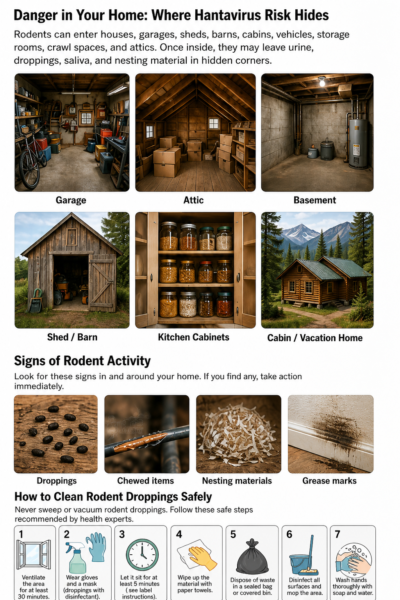
Many people think hantavirus is only a wilderness or rural disease but the real danger often starts inside or around the home. Rodents can enter houses, garages, sheds, barns, cabins, vehicles, storage rooms, crawl spaces and attics. Once inside, they may leave urine, droppings, saliva and nesting material in hidden corners.
The most dangerous areas are often the places people clean only occasionally. A garage that has not been opened for months, a holiday cabin after winter, an attic full of old boxes, a garden shed or a storage room with pet food can all attract rodents. If you sweep or vacuum dried droppings, tiny contaminated particles can rise into the air. This is why health authorities warn against dry sweeping or vacuuming rodent droppings.
Here are most common home risk zones:
| Home Area | Why It Can Be Risky |
|---|---|
| Garage | Rodents hide behind boxes, tools, tires and stored food. |
| Attic | Warm, quiet spaces can become nesting areas. |
| Basement | Damp, dark areas may attract mice and rats. |
| Shed or barn | Rodents may live near seeds, animal feed or clutter. |
| Kitchen cabinets | Food crumbs and poorly sealed packages attract rodents. |
| Cabin or vacation home | Closed spaces may collect droppings during long periods of vacancy. |
| Vehicle | Mice may nest in engine compartments, vents, or stored cars. |
The risk is not just seeing a mouse. The bigger risk is disturbing contaminated dust, nests or droppings without protection.
Hantavirus Statistics: How Common Is It?
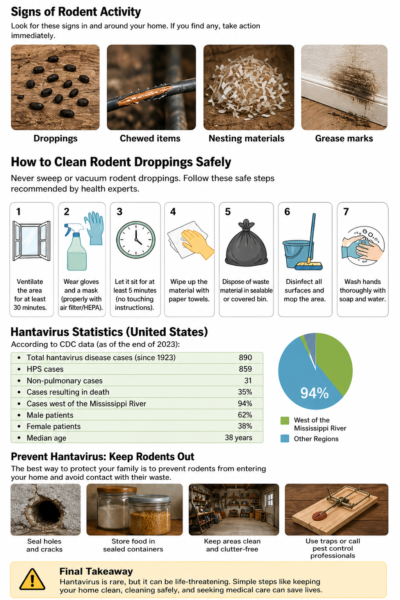
Hantavirus disease is rare but its severity makes it medically important. According to CDC data, as of the end of 2023, 890 laboratory-confirmed cases of hantavirus disease had been reported in the United States since surveillance began in 1993. These included both HPS and non-pulmonary hantavirus infections.
The CDC also reports that 859 of those cases were HPS while 31 were non-pulmonary hantavirus infections. In U.S. data, 94% of cases occurred west of the Mississippi River, which reflects the geographic distribution of key rodent hosts and exposure patterns.
Other notable U.S. statistics include:
| Statistic | Reported Figure |
|---|---|
| Total U.S. hantavirus disease cases reported since 1993 | 890 |
| HPS cases | 859 |
| Non-pulmonary hantavirus cases | 31 |
| Cases resulting in death | 35% |
| Cases west of the Mississippi River | 94% |
| Male patients | 62% |
| Female patients | 38% |
| Median age | 38 years |
These numbers show why hantavirus is often described as rare but serious. A person’s chance of encountering it is low but the consequences can be severe if infection develops.
How Hantavirus Spreads?
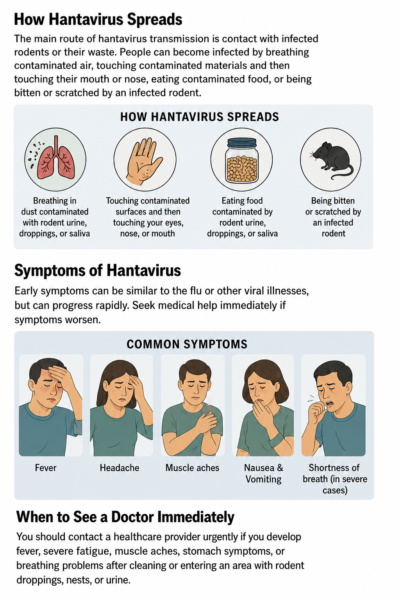
The main route of hantavirus transmission is contact with infected rodents or their waste. People can become infected by breathing contaminated air, touching contaminated materials and then touching their mouth or nose, eating contaminated food or being bitten or scratched by an infected rodent.
The highest-risk cleaning mistake is dry sweeping or vacuuming rodent droppings. This can push contaminated particles into the air. Instead, droppings and urine should be soaked with disinfectant before removal.
Hantavirus is usually not spread from person to person. In the United States, hantaviruses are not known to spread between people. But Andes virus, found in parts of South America, has been associated with limited person-to-person transmission in some outbreaks.
Symptoms of Hantavirus
Hantavirus symptoms can be confusing because the early stage may look like many other illnesses. Early symptoms may include fever, chills, muscle aches, headache, fatigue, nausea, vomiting, diarrhea, abdominal pain and general weakness. These symptoms can easily be mistaken for flu, stomach infection or another viral disease.
As hantavirus pulmonary syndrome progresses, the illness can become much more serious. The lungs may fill with fluid, oxygen levels may fall and the person may develop shortness of breath, coughing, chest tightness, low blood pressure and shock. CDC clinical guidance notes that patients can rapidly become severely ill and may require intensive care, oxygen support, intubation or mechanical ventilation.
Seek urgent medical help if flu-like symptoms develop after possible rodent exposure, especially if breathing becomes difficult. Hantavirus is not something to “wait out” at home when respiratory symptoms appear.
When to See a Doctor Immediately?
You should contact a healthcare provider urgently if you develop fever, severe fatigue, muscle aches, stomach symptoms or breathing problems after cleaning or entering an area with rodent droppings, nests or urine.
Emergency warning signs include:
| Warning Sign | Why It Matters |
|---|---|
| Shortness of breath | May signal lung involvement. |
| Chest tightness | Can occur as HPS progresses. |
| Bluish lips or severe weakness | May indicate low oxygen. |
| Dizziness or fainting | Could suggest low blood pressure or shock. |
| Rapid worsening after flu-like symptoms | HPS can progress quickly. |
How Hantavirus Is Diagnosed?
Diagnosis is based on symptoms, exposure history and laboratory testing. Doctors will want to know whether the patient recently cleaned a rodent-infested area, stayed in a cabin, handled rodents, worked in a barn, camped, opened a storage space or noticed mouse droppings at home.
CDC guidance says blood testing is often the only way to officially diagnose hantavirus because early symptoms resemble other illnesses. Diagnostic methods may include antibody testing, PCR testing or other laboratory methods depending on the case and location.
Because hantavirus can worsen rapidly, doctors may begin supportive emergency care before final test results are available.
Treatment and Recovery
There is no specific cure for hantavirus infection. Treatment focuses on supportive care, especially in severe cases of hantavirus pulmonary syndrome. Patients may need intensive care, oxygen, careful fluid management, blood pressure support, intubation, ventilation or advanced cardiopulmonary support.
Early medical care can improve the chance of survival. CDC guidance emphasizes that suspected HPS patients need emergency medical care immediately, preferably in an intensive care setting even before diagnosis is confirmed.
Recovery change. Some survivors improve after the critical phase but severe cases can require significant hospital care. Because the illness can progress from flu-like symptoms to life-threatening breathing problems, early recognition is one of the most important factors.
How to Clean Rodent Droppings Safely?
Safe cleaning is one of the most important hantavirus prevention steps. The CDC specifically warns not to vacuum or sweep rodent urine, droppings or nesting materials because this can spread contaminated particles into the air.
Here is great guide for a safer cleanup process:
- Ventilate the area first. Open doors and windows for at least 30 minutes before cleaning then leave the area during ventilation.
- Wear rubber or plastic gloves. Do not touch droppings or nests with bare hands.
- Soak droppings and urine. Spray the area with a bleach solution or EPA-registered disinfectant until very wet then let it sit for at least 5 minutes or follow the disinfectant label.
- Wipe, don’t sweep. Use paper towels to pick up the wet material.
- Dispose safely. Place waste in a covered garbage can or sealed bag.
- Disinfect surfaces. Mop or sponge floors, counters, cabinets, drawers and other hard surfaces.
- Wash hands carefully. Wash gloved hands before removing gloves, then wash bare hands with soap and warm water afterward.
For heavy infestations, professional pest control may be safer than attempting cleanup alone.
How to Prevent Hantavirus at Home?
The best prevention strategy is to keep rodents out and reduce contact with rodent waste. WHO recommends sealing openings that allow rodents to enter buildings, storing food securely, keeping homes and workplaces clean, using safe cleaning practices, avoiding dry sweeping or vacuuming droppings and dampening contaminated areas before cleaning.
Practical prevention steps include sealing holes around pipes, doors, vents and foundations; storing food in rodent-proof containers; keeping pet food sealed; removing clutter; trimming vegetation near the house, and using traps where rodent activity is seen.
Cabins, sheds, and vacation homes need special care. Before sleeping or spending time inside, ventilate the space, look for droppings and clean safely. Never sleep in a room with visible rodent infestation until it has been properly cleaned and disinfected.
Can Pets Spread Hantavirus?
Dogs and cats are not known to become infected with hantavirus in the United States but they can create indirect risk by bringing rodents into the home. A cat that catches a mouse or a dog that plays with a dead rodent may increase human contact with infected rodents or contaminated materials.
Pet rodents are a separate concern. The CDC notes that pet rodents (including pet rats) are not recommended for families with children 5 years old or younger, pregnant women or people with weakened immune systems because these groups are at greater risk of serious illness from rodent-associated infections.
Is Hantavirus Contagious Between Humans?
For most hantaviruses, person-to-person spread is not typical. In the United States, hantaviruses are not known to spread between people. The main risk remains exposure to infected rodents and contaminated environments.
But Andes virus in South America has been associated with limited human-to-human transmission in previous outbreaks. WHO noted this point again during a May 2026 cluster linked to cruise ship travel, while also assessing the risk to the global population from that event as low.
Recent Hantavirus Concern: Why People Are Searching in 2026?
Hantavirus gained renewed public attention after WHO reported a cluster of severe respiratory illness linked to cruise ship travel in May 2026. As of May 4, 2026, WHO reported seven cases, including two laboratory-confirmed hantavirus cases, five suspected cases, three deaths, one critically ill patient and three people with mild symptoms.
This event does not mean hantavirus is suddenly common everywhere. It does, but remind the public that hantavirus can be severe, can appear in unusual settings and requires careful investigation when clusters occur. For most households, the most practical lesson remains simple: prevent rodent infestations and clean rodent-contaminated areas safely.
Most Common Hantavirus Myths
Myth 1: “Only dirty homes get hantavirus.”
Not true. Clean homes, cabins, vehicles, barns and storage spaces can all become contaminated if rodents enter.
Myth 2: “If droppings are dry, they are harmless.”
Dry droppings can be dangerous if they are disturbed and particles become airborne. That is why disinfecting before cleaning is so important.
Myth 3: “Vacuuming is the fastest safe solution.”
Vacuuming can aerosolize contaminated particles and increase risk. Wet disinfection and wiping are safer.
Myth 4: “You can always tell if a mouse carries hantavirus.”
You can’t identify infected rodents by appearance. Prevention should focus on avoiding rodent contact and contamination.
Myth 5: “Hantavirus always spreads like flu.”
Most hantavirus infections are linked to rodents not routine human-to-human spread. The major exception is limited transmission reported with Andes virus in South America.
Hantavirus Prevention Checklist
Use this checklist for homes, cabins, garages, sheds and storage spaces:
| Prevention Step | Why It Helps |
|---|---|
| Seal holes and cracks | Blocks rodent entry. |
| Store food in sealed containers | Removes food sources. |
| Clean crumbs and spills quickly | Makes the home less attractive to rodents. |
| Keep pet food sealed | Reduces rodent feeding opportunities. |
| Remove clutter | Reduces nesting areas. |
| Ventilate closed spaces before cleaning | Reduces exposure to contaminated air. |
| Disinfect droppings before removal | Prevents dust and particles from becoming airborne. |
| Avoid sweeping or vacuuming droppings | Reduces inhalation risk. |
| Use gloves | Prevents direct contact. |
| Call professionals for heavy infestation | Reduces exposure during large cleanups. |
Final Takeaway
Hantavirus is rare but it deserves serious attention because it can become life-threatening quickly. The greatest everyday risk is not dramatic contact with wild animals; it is ordinary exposure to rodent urine, droppings, saliva or nesting materials in places like garages, cabins, sheds, attics, barns and storage rooms.
The most important protection steps are simple: keep rodents out, store food securely, avoid touching rodent waste, never sweep or vacuum droppings, ventilate closed spaces, disinfect contaminated areas before cleaning and seek urgent medical care if flu-like symptoms or breathing problems occur after possible rodent exposure.
Medical note: This article is for general health information only and does not replace medical diagnosis or treatment. Anyone with possible hantavirus symptoms after rodent exposure should contact a healthcare professional or emergency service immediately.
We wish a happy and healthy life to you. You can find helpful advices about one of the most common viruses: Herpes at the fallowing link.