Vaginal odor is something many people notice at different points in life but it can feel embarrassing to talk about. The truth is simple: the vagina has a natural scent. A mild vaginal scent may change during the menstrual cycle, after sex, after exercise, during pregnancy or around menopause. Not every change means something is wrong.
But a strong vaginal odor, a fishy vaginal odor, a foul vaginal smell or discharge with odor can sometimes be a sign of bacterial vaginosis, trichomoniasis, a sexually transmitted infection, a retained tampon or another medical issue. The key is learning the difference between normal feminine smell and warning signs that need medical attention.
This guide explains common vaginal smell causes, why a fishy smell can happen, what different types of discharge may mean, which home remedies are reasonable and when it is time to see a doctor.
Is Vaginal Odor Normal?
Yes, a mild vaginal odor is normal. A healthy vagina contains bacteria, moisture, sweat glands nearby and natural discharge. These all create a scent that may be slightly musky, tangy, metallic around menstruation or stronger after sweating.
Normal vaginal scent may change because of:
- Menstrual blood
- Sexual activity
- Semen exposure
- Sweat and tight clothing
- Hormonal changes
- Pregnancy
- Menopause
- Antibiotic use
- Diet, hydration and hygiene habits
A normal smell is usually mild and not unpleasant. It should not be accompanied by strong itching, burning, pelvic pain, bleeding, sores, fever or a sudden foul vaginal smell.
The problem begins when the odor becomes noticeably strong, fishy, rotten, sour in an unusual way or is paired with abnormal discharge. For example, “my discharge smells bad but not fishy” is a common concern. That may still point to an imbalance, irritation, retained menstrual product or infection even when the classic fishy smell is absent.

Why Does Vaginal Odor Happen?
Vaginal odor usually comes from one of three broad categories: normal body changes, vaginal microbiome imbalance or infection.
The vagina naturally maintains an acidic environment. Helpful bacteria, especially lactobacilli, play an important role in keeping this balance. When the balance shifts, odor can change. This is why some people notice vaginal smell after sex, after a period, after antibiotics or after using scented products.
Common vaginal smell causes include bacterial vaginosis, trichomoniasis, yeast infections, sweat, urine odor, poor airflow, hormonal changes, menopause and occasionally a forgotten tampon or condom.
It is also important to know that odor alone does not always reveal the exact cause. Two people can have similar symptoms but different diagnoses. Testing is often needed if the smell is strong, persistent or linked with abnormal discharge.
Fishy Vaginal Odor: What It Often Means?
A fishy vaginal odor is one of the most searched symptoms because it is noticeable and worrying. The most common cause is bacterial vaginosis, often called BV.
BV happens when the normal balance of bacteria in the vagina changes. Instead of the usual protective bacteria being dominant, other bacteria overgrow. This can cause to a thin white or gray discharge, a fishy odor smell and odor that becomes stronger after sex or during menstruation.
Many people search terms such as “fishy smelling vaginal odor,” “fishy smell after sex,” “fishy smell during sex,” “fishy discharge,” “bv smell,” or “bacterial vaginosis smell.” These searches usually describe the same pattern: a strong, unpleasant, fish-like odor that may be worse after semen changes vaginal pH.
BV is common and treatable but it is not something to ignore if symptoms are persistent. Untreated BV may increase the risk of some sexually transmitted infections and pregnancy complications. A doctor can diagnose BV with a vaginal exam, pH testing, microscopy, or laboratory testing, then prescribe appropriate treatment such as metronidazole or clindamycin.
You can find detailed and great guide about Bacterial Vaginosis at the fallowing link.
Fishy Smell After Sex
Fishy smell after sex is often linked to a temporary pH shift. Semen is more alkaline than the vagina’s usual acidic environment. In some people, this makes an existing BV odor more obvious.
This does not mean sex is “dirty,” and it does not automatically mean a partner caused the problem. But if fishy smell after sex happens repeatedly, especially with discharge and smell, it is worth getting checked.
Possible causes include:
- Bacterial vaginosis
- Trichomoniasis
- Semen changing vaginal pH
- Irritation from lubricants or condoms
- Poor airflow and sweating after sex
- Retained condom fragment, rarely
If the odor is persistent, strong or paired with yellow-green discharge, pain, itching, burning or bleeding, medical testing is the safest next step.
Discharge With Odor: What Color and Texture Can Suggest?
Vaginal discharge changes throughout the cycle. Clear, white, creamy or milky discharge can be normal, especially when there is no odor, itching, burning or pain.
However discharge with odor deserves attention. The color, texture and smell can give clues, although only testing can confirm the cause.
Thin white or gray discharge with fishy odor
This pattern often points to bacterial vaginosis. The smell may become stronger after sex or around menstruation.
Yellow or green discharge with odor
Yellow-green discharge; especially if frothy or linked with irritation, may suggest trichomoniasis or another sexually transmitted infection. Some people search for “yellow green discharge without odor,” but even without odor, greenish discharge should be taken seriously if it is new, persistent, or accompanied by discomfort.
Thick white discharge no smell
Thick white discharge with no smell; can be normal for some people. But if it looks like cottage cheese and comes with itching, redness or burning, it may be a yeast infection. Many people search “thick white discharge no smell,” “thick white discharge no odor,” “creamy white discharge no odor,” or “creamy white discharge no smell.” Odor may be absent in yeast infections but itching is often prominent.
Milky white discharge no odor
Milky white discharge no odor; or milky white discharge no smell, can be normal around ovulation, before a period or during pregnancy. If it is not associated with itching, pelvic pain, bleeding or a strong odor, it may simply be normal cervical mucus.
Yellow discharge no odor
Yellow discharge no odor; yellow discharge no smell, yellow discharge without odor or yellow no smell discharge can sometimes be normal if it is very pale and not linked to symptoms. But bright yellow, deep yellow, greenish, frothy or persistent discharge should be checked, especially after unprotected sex or a new partner.
Statistics: How Common Are Vaginal Odor-Related Conditions?
Vaginal odor is not rare. Many people experience odor changes at some point but not everyone seeks medical care because of embarrassment or the belief that it will go away.
Here are a few useful statistics:
- Bacterial vaginosis is one of the most common causes of abnormal vaginal discharge and odor among reproductive-age women.
- Global estimates suggest BV affects a significant share of women of reproductive age, with prevalence varying by country and population group.
- Trichomoniasis is one of the most common non-viral sexually transmitted infections worldwide.
- Many people with trichomoniasis do not have obvious symptoms, which means infection can continue without treatment.
- Yeast infections are also common but they more often cause itching and thick white discharge than a fishy odor.
These statistics matter because many people assume strong odor is simply a hygiene problem. In reality, persistent fishy vaginal odor is often a microbiome or infection issue not a personal cleanliness issue.
Bacterial Vaginosis Smell: Why It Is So Distinct?
The bacterial vaginosis smell is often described as fishy, sharp or sour-fishy. It may be mild at first and then become stronger after sex. Some people notice it only during sex, while others smell it throughout the day.
BV does not always cause pain. In fact, some people have very few symptoms besides odor. This is why a strong vaginal odor without itching can still be BV.
Common BV symptoms include:
- Fishy vaginal odor
- Thin white, gray or watery discharge
- Odor after sex
- Odor during menstruation
- Mild irritation or burning, sometimes
- No symptoms at all in some cases
BV is treated with prescription medication. Vaginal odor remedies such as washing more often, perfume sprays, scented wipes or douching may make the imbalance worse. If BV is the cause the goal is not to cover the smell but to restore the vaginal bacterial balance.
Trichomoniasis and Fishy Discharge
Trichomoniasis, often called trich, is a sexually transmitted infection caused by a parasite. It can cause clear, white, yellowish or greenish discharge that may have a fishy smell. Some people also experience itching, burning, redness, soreness, discomfort when urinating or pain during sex.
Trichomoniasis can be confused with BV because both may cause fishy odor. The difference is that trich is sexually transmitted and requires treatment for the infected person and often sexual partner management to prevent reinfection.
Warning signs that may suggest trichomoniasis or another STI include:
- Yellow-green discharge
- Frothy discharge
- Strong odor
- Burning when urinating
- Pain during sex
- Genital redness or soreness
- Symptoms after a new sexual partner
If these symptoms appear, home treatment is not enough. Testing and prescription treatment are needed.
Yeast Infection: Can It Cause Vaginal Odor?
A yeast infection usually does not cause a strong fishy odor. It more commonly causes itching, burning, redness, swelling and thick white discharge that may look like cottage cheese.
That said, some people describe a yeast infection smell as yeasty, bread-like or mildly sour. If there is a strong foul vaginal smell, BV or another infection may be more likely than yeast.
This is why self-diagnosis can be tricky. Using over-the-counter yeast treatment when the real problem is BV or trichomoniasis may delay proper care.
Vaginal Smell After Sex
Vaginal smell after sex can happen for several reasons. Semen, sweat, lubricants, condoms and changes in vaginal pH can temporarily alter scent. A mild smell after sex that disappears after gentle washing is usually not concerning.
But repeated fishy smell after sex may suggest BV. Fishy smell during sex can also be a sign that odor becomes stronger when vaginal fluids mix with semen.
To reduce temporary odor after sex:
- Urinate after sex
- Rinse the vulva with water
- Avoid scented soaps inside the vaginal area
- Wear breathable underwear
- Consider condoms if semen seems to trigger odor
- Avoid douching
If the odor is strong, returns often or comes with discharge, itching, burning or pain, schedule a medical visit.
Vaginal Sweat Odor and Musty Vaginal Odor
Not every odor comes from inside the vagina. Sweat from the vulva, groin, inner thighs and underwear can create a musty vaginal odor, especially after exercise, hot weather or tight clothing.
Vaginal sweat odor may smell musky, salty or musty rather than fishy. It usually improves with showering, changing underwear, and wearing breathable fabrics.
Helpful habits:
- Wearing cotton or moisture-wicking underwear
- Changing out of sweaty clothes quickly
- Avoiding tight synthetic leggings for long periods
- Washing the vulva with water or gentle unscented cleanser
- Drying the area well after bathing
- Avoiding heavily fragranced pads, liners and sprays
If the odor remains strong even after hygiene changes, it may not be sweat alone.
Menopause Vaginal Odor
Menopause vaginal odor can happen because estrogen levels decline. Lower estrogen may cause to vaginal dryness, thinner tissues, pH changes and changes in the vaginal microbiome. Some people notice more irritation, burning, discomfort during sex, urinary symptoms or a different vaginal scent.
Vaginal odor during menopause should not automatically be blamed on aging. BV, urinary tract infections, yeast infections and other conditions can still occur after menopause.
See a doctor if menopause-related odor is accompanied by bleeding, pelvic pain, watery discharge, foul smell, itching, burning or pain during sex. Postmenopausal bleeding should always be evaluated.
Smelly Fishy Urine or Vaginal Odor?
Sometimes the smell may seem vaginal but the source is urine. “Smelly fishy urine” can happen with dehydration, certain foods, vitamins, urinary tract infection or urine mixing with vaginal discharge.
Clues that urine may be involved include:
- Burning when urinating
- Frequent urination
- Urgency
- Lower abdominal discomfort
- Cloudy or strong-smelling urine
- Symptoms that worsen when dehydrated
But BV odor can also be noticed when urinating because vaginal discharge is near the urethra. If you are unsure whether the odor is urine or vaginal discharge, a clinician can test both urine and vaginal fluid.
Home Remedies for Vaginal Odor: What Helps and What Can Harm?
Many people search for home remedies for vaginal odor, home remedies for fishy odor, or how to get rid of vaginal odor. It is understandable to want quick relief but the safest approach depends on the cause.
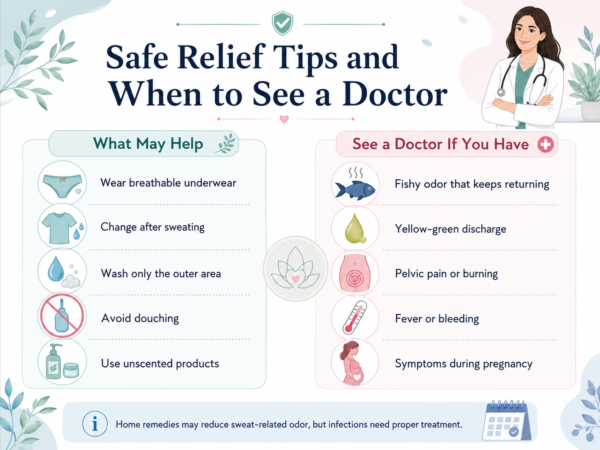
For mild odor without pain, itching, abnormal discharge or STI risk, these habits may help:
- Wash only the outside vulva with water or gentle unscented cleanser
- Avoid douching
- Avoid scented tampons, pads, sprays, and vaginal deodorants
- Change underwear daily
- Wear breathable underwear
- Change after sweating
- Stay hydrated
- Use condoms if semen triggers odor
- Avoid leaving tampons or menstrual cups in too long
What not to do:
- Do not put perfume, essential oils, vinegar, lemon juice or soap inside the vagina.
- Do not douche to remove odor. Douching can disrupt healthy bacteria.
- Do not use antibiotics without a prescription.
- Do not keep repeating yeast treatments if symptoms do not match yeast.
Home remedies may reduce sweat-related odor but they usually do not cure BV, trichomoniasis or other infections. If the odor is fishy, foul, persistent or linked with discharge, testing is better than guessing.
Boric Acid for Vaginal Odor
Boric acid for vaginal odor is a popular search topic, especially for recurring BV or yeast symptoms. Boric acid vaginal suppositories are sometimes used under medical guidance for certain recurrent vaginal conditions but they are not a first-choice treatment for everyone.
Important safety notes:
- Boric acid should never be swallowed.
- It should not be used during pregnancy unless a clinician specifically advises it.
- It can irritate sensitive tissue.
- It may not treat the true cause of odor.
- It should not replace STI testing or BV treatment.
If you are considering boric acid, talk with a healthcare professional first, especially if symptoms are new, severe, recurring or you may be pregnant.
Rephresh Gel, Vaginal Gel and pH Products
Some people search for Rephresh vaginal gel, Rephresh gel, virginal gel, or vaginal gel for odor. These products are designed to help manage vaginal pH or moisture. They may help some people with temporary odor related to pH shifts but they are not a guaranteed cure for infections.
If you have fishy discharge, strong vaginal odor, yellow-green discharge, pelvic pain, or burning, do not rely only on a gel. A pH product may mask symptoms while the underlying condition continues.
When to See a Doctor?
You should see a doctor or gynecologist if vaginal odor is strong, persistent or unusual for you. You should also seek care if odor comes with:
- Fishy vaginal odor that keeps returning
- Foul vaginal smell
- Yellow, green, gray, or frothy discharge
- Discharge with odor
- Pelvic pain
- Pain during sex
- Burning when urinating
- Itching, redness, swelling or sores
- Bleeding between periods
- Fever
- Pregnancy
- Symptoms after a new sexual partner
- A possible forgotten tampon or condom
A doctor may perform a pelvic exam, vaginal pH test, microscopy, swab test, urine test or STI test. This is not something to be ashamed of. Vaginal odor is one of the most common reasons people seek gynecologic care.
Quick Symptom Guide
| Symptom | Possible Cause | What to Do |
|---|---|---|
| Fishy smell, thin gray discharge | Bacterial vaginosis | See a clinician for testing and treatment |
| Yellow-green discharge, irritation, odor | Trichomoniasis or STI | Get STI testing and prescription treatment |
| Thick white discharge no smell, itching | Yeast infection | Consider medical or pharmacy guidance |
| Musty odor after sweating | Sweat and tight clothing | Shower, change clothes, breathable underwear |
| Foul smell, pelvic pain, fever | Infection or retained object | Seek urgent medical care |
| Vaginal odor during menopause | Hormonal pH changes or infection | See a doctor if persistent or uncomfortable |
FAQs About Vaginal Odor
1. Why does my vagina smell fishy?
A fishy smell is commonly linked to bacterial vaginosis, especially if it is stronger after sex or during your period. Trichomoniasis can also cause fishy discharge. If the smell persists, testing is recommended.
2. Is vaginal odor always an infection?
No. Mild vaginal scent is normal. Sweat, sex, periods, hormones and tight clothing can all change odor. But strong, fishy, foul or persistent odor may signal infection or imbalance.
3. Why do I have discharge that smells bad but not fishy?
Bad-smelling discharge that is not fishy may still be caused by infection, irritation, retained menstrual product, sweat or a pH imbalance. If it is new or persistent see a healthcare provider.
4. Is yellow discharge no odor normal?
Pale yellow discharge with no odor can sometimes be normal, especially when it dries on underwear. Bright yellow, greenish, frothy, or persistent yellow discharge should be checked.
5. What does thick white discharge no odor mean?
Thick white discharge with no odor can be normal but if it comes with itching, redness or burning, it may be a yeast infection.
6. Can BV go away on its own?
Sometimes symptoms may improve but BV often returns or persists. If you have fishy odor or bothersome discharge, medical treatment is usually the most reliable option.
7. What are the best home remedies for fishy odor?
Avoid douching, scented products and harsh soaps. Wash only the vulva, wear breathable underwear, change after sweating and consider condoms if odor happens after sex. But if the odor is truly fishy and persistent, home remedies may not be enough.
8. Can boric acid get rid of vaginal odor?
Boric acid may help certain recurrent vaginal conditions under medical guidance but it is not safe for everyone and should not replace diagnosis or STI testing.
9. Why do I smell fishy after sex?
Semen can change vaginal pH and make BV odor more noticeable. If fishy smell after sex happens often, bacterial vaginosis is a common possibility.
10. When is vaginal odor urgent?
Seek urgent care if odor is foul and comes with pelvic pain, fever, heavy bleeding, pregnancy, severe discomfort or suspicion of a forgotten tampon.
We wish a healthy and happy life to you. You can find helpful advices and protection ways from one of the most common STI’s: HPV at the fallowing link.