What is Clitoral Hood Reduction?
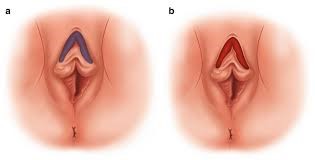
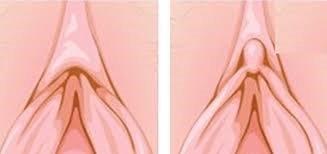
Clitoral hood reduction, also called hoodectomy, clitoral hoodoplasty or clitoral unhooding, is a surgical procedure that removes or reshapes excess tissue from the skin folds covering the clitoris. The goal is usually to improve comfort, reduce rubbing or tugging and create a more balanced vulvar appearance.
In real-world practice; hoodectomy is most commonly performed together with labiaplasty not as a stand-alone operation. ASPS explains that excess folds of the clitoral hood can look more prominent after labia minora reduction, so surgeons often combine the two procedures for better visual balance.
You can find a great guide for labiaplasty at the fallowing link.
Why Patients Consider Hoodectomy?
Patients usually seek clitoral hood reduction for one or both of two reasons: functional discomfort and aesthetic preference. Functional complaints can include irritation from underwear, exercise, twisting or tugging of tissue or discomfort during intimacy. Aesthetic concerns often center on fullness, asymmetry or a desire for a smoother contour.
Recent surgical literature suggests that physical complaints are not rare among people who pursue combined labia minora and clitoral hood procedures. In a recent study indexed in PubMed, 68 patients undergoing composite labia minora and clitoral hood reduction most often sought surgery because of physical discomfort, followed by aesthetic concerns, hygiene concerns and less commonly interference with sexual intercourse. That does not prove every hoodectomy is function-driven but it does show that many patients are not pursuing surgery for appearance alone.
Professional guidance is more cautious than cosmetic marketing. The ACOG Committee Opinion summary states that patients should understand that procedures intended to alter genital appearance or sexual function are elective and require careful counseling.
Who may be a Good Candidate for Clitoral Hood Reduction?
A good candidate is someone who is bothered by persistent excess tissue, recurrent irritation or a disproportionate appearance that remains bothersome after education about normal anatomical variation. Good candidates also tend to have realistic expectations, understand scar and sensation risks and are choosing the procedure for themselves rather than because of pressure from a partner, social media, or pornography-driven ideals.
Someone may need to pause or reconsider surgery if they expect hoodectomy to “guarantee” stronger orgasms, completely transform sexual response or erase all self-consciousness. Cleveland Clinic explicitly warns that surgeons do not usually recommend exposing the clitoral glans more aggressively just to increase sensitivity because removing too much tissue can have unpredictable consequences, including pain.
How Hoodectomy is Performed?
Most clitoral hood reduction procedures are outpatient surgeries, meaning the patient goes home the same day. The Aesthetic Society says many procedures take less than an hour although timing change on anatomy and whether other procedures are added.
Anesthesia varies. According to ASPS and The Aesthetic Society, hood reduction is often done with local anesthesia plus oral or IV sedation though general anesthesia may also be used. During the procedure; the surgeon marks excess tissue based on the patient’s anatomy, removes the excess carefully, avoids disturbing important clitoral structures and nerves and closes the area with absorbable or dissolvable sutures.
Technique matters. ASPS notes that the pattern of tissue removal depends on individual anatomy and in some cases the excision is designed as an extension of the labiaplasty. Recent surgical reviews also show that complication profiles vary by technique across the broader labiaplasty literature which is one reason surgeon experience is so important in intimate surgery.
Recovery After Hoodectomy
Recovery is usually measured in weeks for early healing and months for final tissue settling. Most patients should expect some pain, swelling and discomfort right after surgery. A week away from work or strenuous activity is commonly recommended when hood reduction is combined with labiaplasty while recovery may be shorter for stand-alone hoodectomy.
Swelling often improves significantly by about six weeks but the genital area can still look swollen for up to six months. Patients are typically told to wear loose clothing, avoid friction, keep the area dry, pat rather than wipe after urination and use cold packs carefully over underwear during the early postoperative period. Also advises avoiding sexual contact near the clitoris and avoiding tampons for four to six weeks.
The Aesthetic Society advises standard surgical precautions before and after the operation: stop smoking before surgery, avoid aspirin and certain anti-inflammatory or herbal medications that raise bleeding risk, stay hydrated, arrange a ride home and have someone stay the first night if instructed. These details may sound basic but they affect bleeding risk, healing quality and comfort more than many readers realize.
Risks, Complications and Limitations
Like any surgery hoodectomy carries real risk. ASPS lists bleeding, hematoma, infection, nerve damage, under-resection and over-resection among the main risks. Cleveland Clinic similarly lists bleeding, hematoma, infection, and nerve injury and adds that over-resection may not be correctable.
That is exactly why professional societies stress informed consent. The ACOG Committee Opinion summary says patients considering genital cosmetic procedures should be counseled carefully, particularly when the goal is to change sexual appearance or function rather than treat disease. In other words, a hoodectomy should be approached as real surgery not as a spa-like beauty service.
Direct hoodectomy-only complication data are limited but broader labiaplasty evidence is useful for perspective. A 2021 systematic review and meta-analysis reported a 99% pooled satisfaction rate after labia minoraplasty, while a 2024 meta-analysis found complications were generally rare overall but somewhat higher for certain techniques, including wedge resection, where dehiscence was reported at 8% in pooled analysis. Those figures should not be copied straight onto hoodectomy alone but they show that results can be excellent while technique-specific complications still matter.
Clitoral Hood Reduction and Sexual Sensation
One of the most searched questions is whether hoodectomy improves sex. The honest answer is: sometimes patients feel better about comfort and confidence but surgery is not a guaranteed sexual-function upgrade. Statistics says many patients report aesthetic satisfaction, less self-consciousness, relief of physical discomfort, improved psychological well-being and increased confidence after surgery.
But Cleveland Clinic also warns against expecting the procedure to deliberately “uncover” the clitoris to create more sensation. Removing too much tissue may cause to pain or hypersensitivity and ASPS specifically lists nerve damage as a potential complication. So the best way to frame sexual outcomes is this: hoodectomy may help when excess tissue is causing friction, bulk or imbalance but it is not a dependable shortcut to stronger arousal or orgasm.
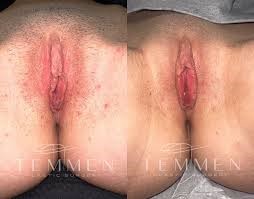
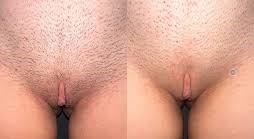
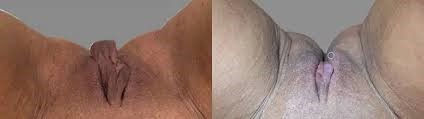
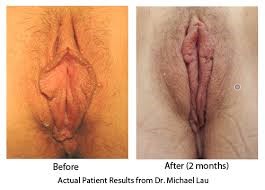
Clitoral Hood Reduction Before and After Photos
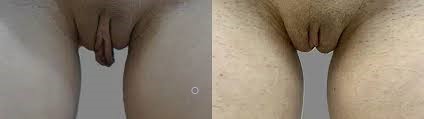
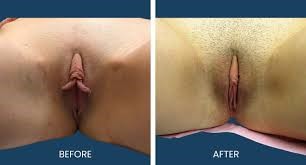
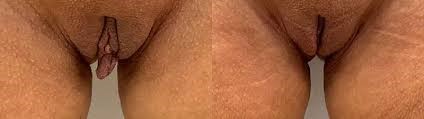
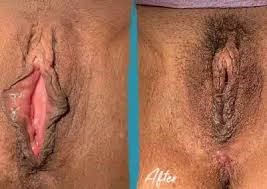
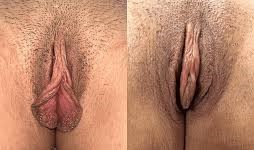
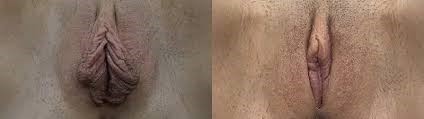
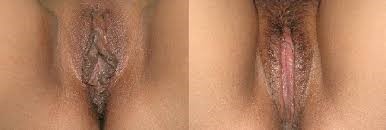
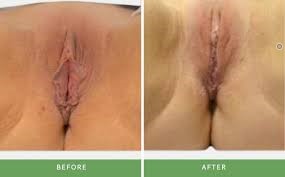
Hoodectomy Cost
The most concrete official cost figure currently easy to verify comes from The Aesthetic Society, which lists the average cost of clitoral hood reduction at $1,524, based on the 2022 Aesthetic Plastic Surgery National Databank Statistics. Importantly that figure reflects only standard procedure costs such as surgeon and facility fees and may exclude anesthesia, medical tests, prescriptions, garments and other miscellaneous expenses.
That means the real bill can be meaningfully higher than the headline number. If a hoodectomy is done with labiaplasty, the total usually rises. ASPS’s 2024 statistics report lists a physician-fee range of $3,550 to $6,500 for labiaplasty which helps explain why combined intimate surgery packages are often several thousand dollars rather than the hoodectomy average alone.
Insurance usually does not cover clitoral hood reduction because it is generally classified as an elective cosmetic procedure. Both Cleveland Clinic and The Aesthetic Society say coverage is uncommon, although financing plans may be available through some practices. For readers researching “hoodectomy cost,” the smartest budgeting advice is to ask for a full written quote that includes the surgeon’s fee, anesthesia, facility charge, pre-op testing, medications and revision policy.
What Affects Hoodectomy Price?
The final hoodectomy price is usually driven by:
| Cost factor | Why it changes the price |
|---|---|
| Surgeon experience | Higher-volume intimate surgery specialists often charge more |
| Geography | Major metro areas and high-cost regions tend to have higher fees |
| Stand-alone vs combined surgery | Adding labiaplasty or other vulvar procedures increases total cost |
| Type of anesthesia | Local with sedation may cost less than general anesthesia |
| Facility setting | Office suite, ambulatory center, and hospital pricing differ |
| Complexity of anatomy | More precise reshaping can take longer and cost more |
This summary reflects The Aesthetic Society’s cost page, ASPS patient guidance and The Aesthetic Society’s pre-op information.
Specific Cost Chart: Clitoral Hood Reduction (Hoodectomy)
| Cost item | Specific published price | What it usually reflects |
|---|---|---|
| Clitoral hood reduction average cost | $1,524 | Average procedure cost published by The Aesthetic Society |
| Labiaplasty average cost | $3,665 | Useful benchmark because hoodectomy is often combined with labiaplasty |
| Labiaplasty surgeon/physician fee range | $3,550–$6,500 | ASPS published fee range; helpful for estimating combined surgery pricing |
| Insurance coverage | Usually $0 covered | Hoodectomy is generally considered elective/cosmetic, so insurance often does not pay |
Hoodectomy Statistics and Procedure Trends
Because annual national and international reports do not usually list clitoral hood reduction as its own major stand-alone category, the clearest trend data come from related procedures, especially labiaplasty. In the United States, the ASPS 2024 statistics report recorded 10,827 labiaplasties, up 2% from 2023. The same report lists a 2.2% change in its gender distribution file for women, reflecting continued demand rather than a disappearing niche.
Worldwide, the ISAPS 2024 survey reported 210,633 labiaplasties, up 3.7% from 2023 and 48.2% from 2020. ISAPS also listed 87,179 “other outer genital surgery” procedures globally. A fair inference is that hoodectomy activity is partly hidden inside these broader categories or bundled with labiaplasty rather than being counted separately as a headlining statistic.
For patient-outcome statistics, the best available numbers still mostly come from labiaplasty and combined genital aesthetic surgery research rather than isolated hoodectomy series. ASPS says clitoral hood reduction is generally performed with labiaplasty, which has a satisfaction rate of over 90% in its patient guidance. The 2021 meta-analysis cited above found an even higher pooled satisfaction estimate of 99% for labia minoraplasty. Those are encouraging numbers but they should be read as related-procedure evidence not a guarantee for every hoodectomy.
Hoodectomy vs. Labiaplasty vs. Combined Surgery
| Feature | Clitoral hood reduction (hoodectomy) | Labiaplasty | Combined surgery |
|---|---|---|---|
| Main target | Excess tissue over the clitoris | Labia minora tissue | Both areas together |
| Common goal | Reduce bulk, friction, or disproportion | Reduce length, asymmetry, irritation, or bulk | Better balance and contour |
| Often done alone? | Less often | Yes | Very common when hood tissue is also prominent |
| Anesthesia | Local with sedation or general | Similar | Similar |
| Recovery driver | Usually mild to moderate, depends on extent | Main determinant in many combined cases | Often follows the labiaplasty timeline |
| Cost | Lower if isolated | Higher than isolated hoodectomy | Highest total cost |
How to Choose a Surgeon?
The most important decision is not the incision pattern or the before-and-after gallery. It is the surgeon. ASPS says the first and most important step in aesthetic genital plastic surgery is choosing a board-certified plastic surgeon. The Aesthetic Society likewise advises choosing a board-certified surgeon with extensive experience performing clitoral hood reduction and recommends asking how many of these procedures they have done, where they operate, what scars to expect, what complications they see and what happens if the outcome misses the agreed goals.
For a hoodectomy specifically, it is wise to ask not only about general cosmetic credentials but about the surgeon’s experience with clitoral hood anatomy, nerve-preserving technique, revision policy and whether they believe your concerns are best treated with hood reduction alone or with a different or combined procedure. In intimate surgery, good judgment is as valuable as technical skill.
FAQ: Most Searched Questions About Hoodectomy
Is clitoral hood reduction the same as labiaplasty?
No. Hoodectomy reduces excess tissue of the clitoral hood, while labiaplasty reshapes the labia minora. They are different procedures although they are frequently performed together.
Does hoodectomy increase sensitivity?
Not reliably. Some patients may feel less friction or better balance but Cleveland Clinic warns that removing too much tissue to expose the clitoral glans can produce unpredictable results, including pain.
How long does hoodectomy recovery take?
Early recovery is usually measured in days to weeks but swelling may continue improving for up to six months. Sexual activity and tampons are commonly restricted for four to six weeks.
Is hoodectomy painful?
There is postoperative pain, swelling and tenderness but it is usually temporary. Pain control, cold packs, loose clothing and rest are standard parts of recovery.
Does insurance cover hoodectomy?
Usually no. It is generally treated as an elective cosmetic procedure, so patients often pay out of pocket.
What is the average hoodectomy cost?
The Aesthetic Society lists an average cost of $1,524 but that figure may exclude anesthesia, testing, medications and other charges so actual totals are often higher.
Is hoodectomy worth it?
For carefully selected patients bothered by discomfort, bulk or persistent appearance concerns, it can be worthwhile. The key is realistic expectations, understanding the risks and choosing an experienced board-certified surgeon.
Besides that you can find a great comparison tables for Clitoral Hood Reduction-Clitoropexy and Clitoral Reduction at the fallowing link.
Bottom Line
Clitoral hood reduction is a real surgical procedure, not a casual cosmetic add-on. It can help some patients with irritation, tissue bulk, disproportion or dissatisfaction with vulvar contour, especially when paired appropriately with labiaplasty. But it should be approached with caution, honest counseling and respect for the wide range of normal anatomy. The strongest evidence shows high satisfaction in the broader labiaplasty literature and growing demand in both U.S. and global procedure statistics, while direct hoodectomy-only data remain limited. For most readers, the best path is simple: prioritize surgeon skill, protect sensation, demand full cost transparency and never treat marketing claims as a substitute for medical judgment.
We wish a healthy and happy life to you. Also you can find helpful a great guide for Brazilian Butt Lift (BBL) Surgery at the fallowing link.